
The True Self and the Desired Self
Los renglones torcidos de DiosAlice’s life and the patients’ cases repeatedly reveal conflicts between the person one is, the person one longs to be, and the realities one cannot bear.
increasing Bearing strength in each event
 decreasing
Bearing strength in each eventdecreasingA Definition in Conversation

A Conflict of Selves
Alice’s formulation
Asked for a definition of madness, Alice describes conflict between the real self and the desired self. The answer seems abstract, yet it anticipates the contradiction between her ideals and her marriage.
A clinical clue
The doctors note the concept without immediately knowing how it applies to her. The definition becomes a framework for considering whether her illness protects her from a painful reality.
Patients as Contrasting Cases
Repression and Exposure
Different routes to distress
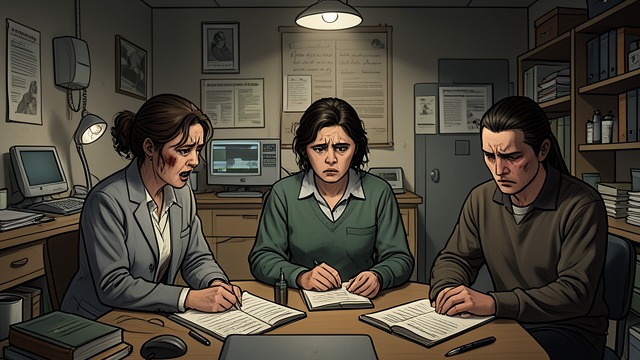
Charito’s manic episodes bring grandiose beliefs into speech, while Ignacio’s phobia conceals a memory he cannot face. Luis Ortiz’s invented guilt offers another example of a mind reshaping experience.
Alice learns by comparison
As she studies these residents, she sees that symptoms can reveal, distort, or hide a person’s inner life. Their cases deepen her interest in psychiatry and sharpen her questions about her own mind.
The Ideal Meets Betrayal
A Vulnerable Ideal
A life misrecognized
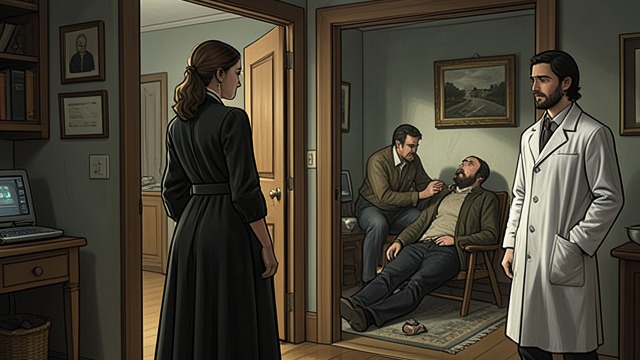
Alice’s ideal of marriage, loyalty, and human dignity collides with Heliodoro’s exploitation and humiliation. The discrepancy may have helped transform unbearable experience into a delusional story that preserved her self-image.
A possible recovery
Arellano argues that removing the source of trauma may improve her prospects. The novel treats this as a reasoned prognosis, not a guarantee, and leaves Alice’s future open to both vulnerability and choice.
During Alice’s psychological testing
During Alice’s later interviews with Arellano
After María Luisa recounts Alice’s married life
